
Selection of Potassium Humate Forms for Planting Palm Trees
author: Laura Wang
2025-08-05
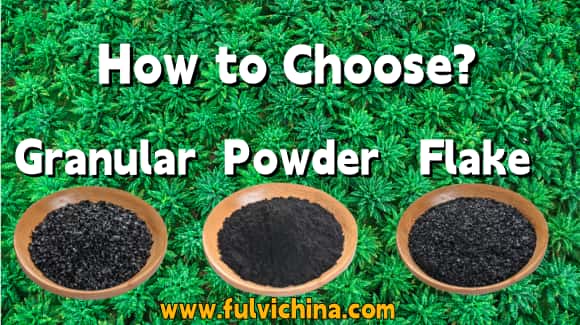
When choosing a form of potassium humate (flakes, powder, or granules) for palm tree cultivation, granules are generally the preferred and most common choice. The following is a detailed analysis and reasons:
1. Granular Potassium Humate - Recommended
Advantages:
Advantages:
Slow-Release Effect: Granular fertilizers dissolve and release nutrients relatively slowly in the soil, providing a longer-lasting and more stable supply of humic acid and potassium. This is particularly beneficial for perennial plants like palm trees, which grow relatively slowly and require a long nutrient cycle, preventing short-term nutrient overload or later nutrient deficiency.
Easy Application: Granules are easy to spread. Whether shallowly buried in trenches around the drip line of the tree canopy or shallowly covered with soil or watered after spreading, application is relatively simple and prevents drift. They are particularly suitable for large palm plantations or individual palm tree applications in gardens.
Reduced Losses: Due to their larger size, they are less likely to be quickly washed away by rain or irrigation water, resulting in relatively low nutrient loss.
Sustained Soil Improvement: Particles slowly decompose in the soil, allowing humic acid to continue its effects of improving soil structure, enhancing water and fertilizer retention, and stimulating microbial activity over a longer period of time.
Disadvantages: The effects are slightly slower than powders (but longer-lasting).
Suitable Applications: Ideal for palm trees as a base fertilizer (mixed into the subsoil at planting or repotting) or as a topdressing fertilizer (applied regularly along the drip line or broadcast during the growing season).
2. Powdered Potassium Humate
Advantages:
Advantages:
Quick Dissolution and Fast Results: The powder has high solubility and quickly releases nutrients, making it particularly suitable for situations requiring a quick replenishment of humic acid and potassium (such as when symptoms of potassium deficiency are present).
Easy to Mix: Easy to mix evenly with soil, substrate, or other fertilizers (such as organic fertilizers).
Suitable for Specific Applications: Ideal for preparing water-soluble fertilizers for root irrigation or foliar spraying (please confirm product instructions for foliar application).
Disadvantages:
Susceptible to windfall losses: When spreading, the powder is easily dispersed by the wind, causing waste and risk of inhalation.
Susceptible to caking: It clumps easily when exposed to moisture, affecting uniform application.
Short-lasting effect: Nutrients are released quickly, but for a shorter duration, requiring more frequent application.
Risk of leaching: Nutrients are more likely to be leached in sandy soils or during heavy rainfall/excessive irrigation.
Suitable Applications:
When rapid nutrient replenishment is needed (e.g., emergency potassium supplementation).
Prepare an aqueous solution for root irrigation (direct and rapid effect).
Mix evenly into the growing medium when preparing the planting medium.
Suitable for topdressing container palms (dissolves in water and then waters).
3. Potassium Humate Flakes
Advantages:
Advantages:
Precise application: Each tablet provides a fixed dosage, suitable for precise application in small areas (e.g., a small number of potted plants).
Relatively clean operation: Less windfall than powders.
Disadvantages:
Uneven dissolution rate: Dissolution rates may be inconsistent, affecting uniform nutrient release.
Limited applicability: For large ground-grown palms, many tablets are required, making buried or broadcast application inconvenient and inefficient, and difficult to evenly distribute within the primary root zone (near the drip line).
Can be costly: The unit nutrient cost is generally higher than granules or powders.
Suitable Applications: Primarily for small potted palms, it can be buried within the potting soil as directed. It is not recommended as the primary choice for ground-grown palms.
Summary and Recommendations
Preferred Granular Form: For most palm cultivation scenarios (ground planting, large potted plants, and plantations), granular potassium humate is the best choice. It provides the long-lasting, stable nutrient supply and soil improvement benefits palms need most. It is easy to apply, minimizes losses, and meets the palm tree's fertilizer requirements.
Preferred Granular Form: For most palm cultivation scenarios (ground planting, large potted plants, and plantations), granular potassium humate is the best choice. It provides the long-lasting, stable nutrient supply and soil improvement benefits palms need most. It is easy to apply, minimizes losses, and meets the palm tree's fertilizer requirements.
Powdered Form as a Supplement: Powdered form is particularly useful when quick results are needed (such as emergency top-up fertilization), for root irrigation, or when preparing a substrate. Can be used in conjunction with granular fertilizers (for example, using granules as a base fertilizer and long-lasting topdressing, with occasional powder solution for quick root irrigation).
Flakes are less suitable: Flakes are primarily suitable for small potted plants and are not recommended as the primary form of palm cultivation (especially for ground planting).
Important Notes
Always apply according to the recommended dosage in the product instructions. Excessive application may be unhelpful or even harmful.
Avoid the base of the trunk and focus on the area around the crown projection (drip line), as this is where the absorbing roots are densely distributed. Applying in shallow trenches (5-10 cm deep) and then covering with soil, or spreading the application evenly and then watering/covering with soil, is more effective.
Avoid the base of the trunk and focus on the area around the crown projection (drip line), as this is where the absorbing roots are densely distributed. Applying in shallow trenches (5-10 cm deep) and then covering with soil, or spreading the application evenly and then watering/covering with soil, is more effective.
Potassium humate is an excellent soil conditioner and root promoter, rich in potassium and humic acid. However, it cannot fully replace all the macronutrients (nitrogen and phosphorus) and trace elements required for palm tree growth. It needs to be used in conjunction with other fertilizers (such as slow-release fertilizers or compound fertilizers specifically for palm trees) to meet their comprehensive nutritional needs.
Promptly watering after application facilitates dissolution and nutrient distribution.
Conclusion: For palm tree planting, granular potassium humate is the preferred choice for basal application and regular topdressing. Powdered potassium humate can be used as a quick supplement (root irrigation). Tablets are only suitable for small potted plants.
